Hungary

Unveil the Charm of Hungary: A Mosaic of Culture, History, and Natural Beauty
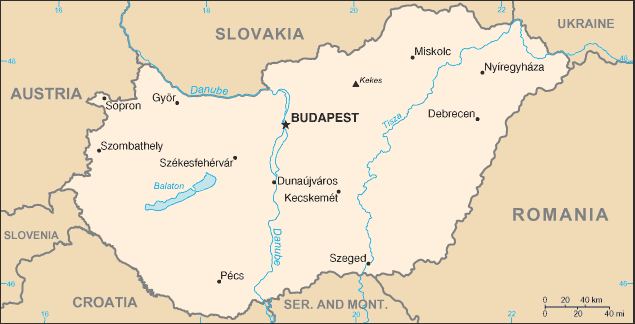
 Map of Hungary

Immerse yourself in the heart of Central Europe where Hungary awaits, a country rich with a history that stretches from the Roman times through the era of Magyar tribes setting their roots, to its rise as a European power in the Austro-Hungarian Empire. Today, Hungary stands proud with its unique language and cultural heritage, its capital Budapest shining brightly as the 'Pearl of the Danube'.

Woven Through Time: The Hungarian Narrative

The narrative of Hungary is a chronicle of resilience and pride. From the reign of Saint Stephen, the first King of Hungary, through the Ottoman occupation, to the revolutions against Habsburg and Soviet rule, Hungary has continuously carved its identity, remaining a testament to its enduring spirit and rich traditions.

Budapest: Where Every Street Tells a Story

Straddling the Danube, Budapest is a tapestry of architectural wonder, with the majestic Parliament building, the historic Buda Castle, and the iconic Chain Bridge. The city's thermal baths, like the Széchenyi, offer a dip into both relaxation and history.

Lake Balaton: A Natural Retreat

Escape to Lake Balaton, the largest lake in Central Europe, affectionately known as the 'Hungarian Sea'. Its shores offer vineyards, historic towns, and summer festivals, making it a favorite for both leisure and cultural delights.

Eger: A Blend of History and Wine

In northern Hungary, Eger beckons with its storied castle, baroque buildings, and the Valley of Beautiful Women, renowned for its exquisite wines, especially the bold 'Bull's Blood'.

Pécs: A Cultural Melting Pot

Discover Pécs, a city adorned with a UNESCO World Heritage Site status, celebrating its Roman past, Ottoman influences, and a wealth of historical churches and buildings.

From the Great Hungarian Plain to the historic town of Szentendre, Hungary offers a voyage into its soulful landscapes and vibrant culture. Let travel.frogsfolly.com be your guide to this enchanting land where history, hospitality, and the heartbeat of Europe come together. Join us in exploring Hungary, a country that not only lies at the crossroads of continents but also at the intersection of history and modern-day charm.

Hungary
Recent Uploads tagged hungary

			<p><a href="https://www.flickr.com/people/wallyg/">wallyg</a> posted a photo:</p>
	
<p><a href="https://www.flickr.com/photos/wallyg/55250214380/" title="Budapest: Széchenyi lánchíd"><img src="https://live.staticflickr.com/65535/55250214380_41478f77ae_m.jpg" width="160" height="240" alt="Budapest: Széchenyi lánchíd" /></a></p>

<p>The Széchenyi Chain Bridge (Széchenyi lánchíd), completed in 1849, is the first permanent stone bridge to span 375 metres across the Danube, uniting the cities of Buda and Pest.  Designed by English engineer William Tierney Clark and supervised by Scottish engineer Adam Clark, the suspension bridge was the brainchild of Count István Széchenyi, who sought to modernize Hungary’s infrastructure. Its design features two massive, Neoclassical triumphal arches through which the iron chains are threaded, anchored by four iconic stone lions sculpted by János Marschalkó. Though the bridge was largely destroyed by retreating German forces in 1945, it was meticulously rebuilt and reopened in 1949, exactly 100 years after its original inauguration and underwent a major restoration from 2021–2023.</p>
			<p><a href="https://www.flickr.com/people/wallyg/">wallyg</a> posted a photo:</p>
	
<p><a href="https://www.flickr.com/photos/wallyg/55250214160/" title="Budapest: Széchenyi lánchíd"><img src="https://live.staticflickr.com/65535/55250214160_18ef225950_m.jpg" width="240" height="160" alt="Budapest: Széchenyi lánchíd" /></a></p>

<p>The Széchenyi Chain Bridge (Széchenyi lánchíd), completed in 1849, is the first permanent stone bridge to span 375 metres across the Danube, uniting the cities of Buda and Pest.  Designed by English engineer William Tierney Clark and supervised by Scottish engineer Adam Clark, the suspension bridge was the brainchild of Count István Széchenyi, who sought to modernize Hungary’s infrastructure. Its design features two massive, Neoclassical triumphal arches through which the iron chains are threaded, anchored by four iconic stone lions sculpted by János Marschalkó. Though the bridge was largely destroyed by retreating German forces in 1945, it was meticulously rebuilt and reopened in 1949, exactly 100 years after its original inauguration and underwent a major restoration from 2021–2023.</p>
			<p><a href="https://www.flickr.com/people/wallyg/">wallyg</a> posted a photo:</p>
	
<p><a href="https://www.flickr.com/photos/wallyg/55248911952/" title="Budapest: Széchenyi lánchíd"><img src="https://live.staticflickr.com/65535/55248911952_94023f56a7_m.jpg" width="240" height="160" alt="Budapest: Széchenyi lánchíd" /></a></p>

<p>The Széchenyi Chain Bridge (Széchenyi lánchíd), completed in 1849, is the first permanent stone bridge to span 375 metres across the Danube, uniting the cities of Buda and Pest.  Designed by English engineer William Tierney Clark and supervised by Scottish engineer Adam Clark, the suspension bridge was the brainchild of Count István Széchenyi, who sought to modernize Hungary’s infrastructure. Its design features two massive, Neoclassical triumphal arches through which the iron chains are threaded, anchored by four iconic stone lions sculpted by János Marschalkó. Though the bridge was largely destroyed by retreating German forces in 1945, it was meticulously rebuilt and reopened in 1949, exactly 100 years after its original inauguration and underwent a major restoration from 2021–2023.</p>
			<p><a href="https://www.flickr.com/people/wallyg/">wallyg</a> posted a photo:</p>
	
<p><a href="https://www.flickr.com/photos/wallyg/55249725606/" title="Budapest: Széchenyi lánchíd"><img src="https://live.staticflickr.com/65535/55249725606_8944f75f8c_m.jpg" width="240" height="160" alt="Budapest: Széchenyi lánchíd" /></a></p>

<p>The Széchenyi Chain Bridge (Széchenyi lánchíd), completed in 1849, is the first permanent stone bridge to span 375 metres across the Danube, uniting the cities of Buda and Pest.  Designed by English engineer William Tierney Clark and supervised by Scottish engineer Adam Clark, the suspension bridge was the brainchild of Count István Széchenyi, who sought to modernize Hungary’s infrastructure. Its design features two massive, Neoclassical triumphal arches through which the iron chains are threaded, anchored by four iconic stone lions sculpted by János Marschalkó. Though the bridge was largely destroyed by retreating German forces in 1945, it was meticulously rebuilt and reopened in 1949, exactly 100 years after its original inauguration and underwent a major restoration from 2021–2023.</p>
			<p><a href="https://www.flickr.com/people/wallyg/">wallyg</a> posted a photo:</p>
	
<p><a href="https://www.flickr.com/photos/wallyg/55249725631/" title="Budapest: Széchenyi lánchíd"><img src="https://live.staticflickr.com/65535/55249725631_4f9836fe6d_m.jpg" width="240" height="160" alt="Budapest: Széchenyi lánchíd" /></a></p>

<p>The Széchenyi Chain Bridge (Széchenyi lánchíd), completed in 1849, is the first permanent stone bridge to span 375 metres across the Danube, uniting the cities of Buda and Pest.  Designed by English engineer William Tierney Clark and supervised by Scottish engineer Adam Clark, the suspension bridge was the brainchild of Count István Széchenyi, who sought to modernize Hungary’s infrastructure. Its design features two massive, Neoclassical triumphal arches through which the iron chains are threaded, anchored by four iconic stone lions sculpted by János Marschalkó. Though the bridge was largely destroyed by retreating German forces in 1945, it was meticulously rebuilt and reopened in 1949, exactly 100 years after its original inauguration and underwent a major restoration from 2021–2023.</p>
			<p><a href="https://www.flickr.com/people/wallyg/">wallyg</a> posted a photo:</p>
	
<p><a href="https://www.flickr.com/photos/wallyg/55250129685/" title="Budapest: Széchenyi lánchíd"><img src="https://live.staticflickr.com/65535/55250129685_25c918d478_m.jpg" width="240" height="160" alt="Budapest: Széchenyi lánchíd" /></a></p>

<p>The Széchenyi Chain Bridge (Széchenyi lánchíd), completed in 1849, is the first permanent stone bridge to span 375 metres across the Danube, uniting the cities of Buda and Pest.  Designed by English engineer William Tierney Clark and supervised by Scottish engineer Adam Clark, the suspension bridge was the brainchild of Count István Széchenyi, who sought to modernize Hungary’s infrastructure. Its design features two massive, Neoclassical triumphal arches through which the iron chains are threaded, anchored by four iconic stone lions sculpted by János Marschalkó. Though the bridge was largely destroyed by retreating German forces in 1945, it was meticulously rebuilt and reopened in 1949, exactly 100 years after its original inauguration and underwent a major restoration from 2021–2023.</p>
			<p><a href="https://www.flickr.com/people/wallyg/">wallyg</a> posted a photo:</p>
	
<p><a href="https://www.flickr.com/photos/wallyg/55249967234/" title="Budapest: Széchenyi lánchíd"><img src="https://live.staticflickr.com/65535/55249967234_a70db69731_m.jpg" width="240" height="160" alt="Budapest: Széchenyi lánchíd" /></a></p>

<p>The Széchenyi Chain Bridge (Széchenyi lánchíd), completed in 1849, is the first permanent stone bridge to span 375 metres across the Danube, uniting the cities of Buda and Pest.  Designed by English engineer William Tierney Clark and supervised by Scottish engineer Adam Clark, the suspension bridge was the brainchild of Count István Széchenyi, who sought to modernize Hungary’s infrastructure. Its design features two massive, Neoclassical triumphal arches through which the iron chains are threaded, anchored by four iconic stone lions sculpted by János Marschalkó. Though the bridge was largely destroyed by retreating German forces in 1945, it was meticulously rebuilt and reopened in 1949, exactly 100 years after its original inauguration and underwent a major restoration from 2021–2023.</p>
			<p><a href="https://www.flickr.com/people/wallyg/">wallyg</a> posted a photo:</p>
	
<p><a href="https://www.flickr.com/photos/wallyg/55249967004/" title="Budapest: Széchenyi lánchíd"><img src="https://live.staticflickr.com/65535/55249967004_7f6d934ae4_m.jpg" width="240" height="160" alt="Budapest: Széchenyi lánchíd" /></a></p>

<p>The Széchenyi Chain Bridge (Széchenyi lánchíd), completed in 1849, is the first permanent stone bridge to span 375 metres across the Danube, uniting the cities of Buda and Pest.  Designed by English engineer William Tierney Clark and supervised by Scottish engineer Adam Clark, the suspension bridge was the brainchild of Count István Széchenyi, who sought to modernize Hungary’s infrastructure. Its design features two massive, Neoclassical triumphal arches through which the iron chains are threaded, anchored by four iconic stone lions sculpted by János Marschalkó. Though the bridge was largely destroyed by retreating German forces in 1945, it was meticulously rebuilt and reopened in 1949, exactly 100 years after its original inauguration and underwent a major restoration from 2021–2023.</p>
			<p><a href="https://www.flickr.com/people/wallyg/">wallyg</a> posted a photo:</p>
	
<p><a href="https://www.flickr.com/photos/wallyg/55249873023/" title="Budapest: Széchenyi lánchíd"><img src="https://live.staticflickr.com/65535/55249873023_24d7bee81e_m.jpg" width="240" height="160" alt="Budapest: Széchenyi lánchíd" /></a></p>

<p>The Széchenyi Chain Bridge (Széchenyi lánchíd), completed in 1849, is the first permanent stone bridge to span 375 metres across the Danube, uniting the cities of Buda and Pest.  Designed by English engineer William Tierney Clark and supervised by Scottish engineer Adam Clark, the suspension bridge was the brainchild of Count István Széchenyi, who sought to modernize Hungary’s infrastructure. Its design features two massive, Neoclassical triumphal arches through which the iron chains are threaded, anchored by four iconic stone lions sculpted by János Marschalkó. Though the bridge was largely destroyed by retreating German forces in 1945, it was meticulously rebuilt and reopened in 1949, exactly 100 years after its original inauguration and underwent a major restoration from 2021–2023.</p>
			<p><a href="https://www.flickr.com/people/wallyg/">wallyg</a> posted a photo:</p>
	
<p><a href="https://www.flickr.com/photos/wallyg/55248828447/" title="Budapest: Széchenyi lánchíd"><img src="https://live.staticflickr.com/65535/55248828447_105ab6c400_m.jpg" width="240" height="160" alt="Budapest: Széchenyi lánchíd" /></a></p>

<p>The Széchenyi Chain Bridge (Széchenyi lánchíd), completed in 1849, is the first permanent stone bridge to span 375 metres across the Danube, uniting the cities of Buda and Pest.  Designed by English engineer William Tierney Clark and supervised by Scottish engineer Adam Clark, the suspension bridge was the brainchild of Count István Széchenyi, who sought to modernize Hungary’s infrastructure. Its design features two massive, Neoclassical triumphal arches through which the iron chains are threaded, anchored by four iconic stone lions sculpted by János Marschalkó. Though the bridge was largely destroyed by retreating German forces in 1945, it was meticulously rebuilt and reopened in 1949, exactly 100 years after its original inauguration and underwent a major restoration from 2021–2023.</p>
			<p><a href="https://www.flickr.com/people/wallyg/">wallyg</a> posted a photo:</p>
	
<p><a href="https://www.flickr.com/photos/wallyg/55249873183/" title="Budapest: Széchenyi lánchíd"><img src="https://live.staticflickr.com/65535/55249873183_a3145481fd_m.jpg" width="240" height="160" alt="Budapest: Széchenyi lánchíd" /></a></p>

<p>The Széchenyi Chain Bridge (Széchenyi lánchíd), completed in 1849, is the first permanent stone bridge to span 375 metres across the Danube, uniting the cities of Buda and Pest.  Designed by English engineer William Tierney Clark and supervised by Scottish engineer Adam Clark, the suspension bridge was the brainchild of Count István Széchenyi, who sought to modernize Hungary’s infrastructure. Its design features two massive, Neoclassical triumphal arches through which the iron chains are threaded, anchored by four iconic stone lions sculpted by János Marschalkó. Though the bridge was largely destroyed by retreating German forces in 1945, it was meticulously rebuilt and reopened in 1949, exactly 100 years after its original inauguration and underwent a major restoration from 2021–2023.</p>
			<p><a href="https://www.flickr.com/people/203714957@N06/">jordan.dorsett</a> posted a photo:</p>
	
<p><a href="https://www.flickr.com/photos/203714957@N06/55250124150/" title="The Hungarian Parliament"><img src="https://live.staticflickr.com/65535/55250124150_5b759ca081_m.jpg" width="172" height="240" alt="The Hungarian Parliament" /></a></p>

<p>The Hungarian Parliament</p>
			<p><a href="https://www.flickr.com/people/21019716@N05/">roel.ubels</a> posted a photo:</p>
	
<p><a href="https://www.flickr.com/photos/21019716@N05/55249811624/" title="P5043018"><img src="https://live.staticflickr.com/65535/55249811624_a1771986a2_m.jpg" width="240" height="173" alt="P5043018" /></a></p>


			<p><a href="https://www.flickr.com/people/21019716@N05/">roel.ubels</a> posted a photo:</p>
	
<p><a href="https://www.flickr.com/photos/21019716@N05/55249811524/" title="P5043538"><img src="https://live.staticflickr.com/65535/55249811524_1948db296b_m.jpg" width="240" height="142" alt="P5043538" /></a></p>


			<p><a href="https://www.flickr.com/people/21019716@N05/">roel.ubels</a> posted a photo:</p>
	
<p><a href="https://www.flickr.com/photos/21019716@N05/55249808759/" title="P5047507"><img src="https://live.staticflickr.com/65535/55249808759_2b65963c74_m.jpg" width="240" height="117" alt="P5047507" /></a></p>


			<p><a href="https://www.flickr.com/people/21019716@N05/">roel.ubels</a> posted a photo:</p>
	
<p><a href="https://www.flickr.com/photos/21019716@N05/55249973165/" title="P5048717"><img src="https://live.staticflickr.com/65535/55249973165_90388bb53c_m.jpg" width="240" height="212" alt="P5048717" /></a></p>


			<p><a href="https://www.flickr.com/people/21019716@N05/">roel.ubels</a> posted a photo:</p>
	
<p><a href="https://www.flickr.com/photos/21019716@N05/55249571696/" title="P5045333"><img src="https://live.staticflickr.com/65535/55249571696_6970670537_m.jpg" width="240" height="153" alt="P5045333" /></a></p>


			<p><a href="https://www.flickr.com/people/21019716@N05/">roel.ubels</a> posted a photo:</p>
	
<p><a href="https://www.flickr.com/photos/21019716@N05/55249811359/" title="P5042642"><img src="https://live.staticflickr.com/65535/55249811359_15b96414de_m.jpg" width="240" height="146" alt="P5042642" /></a></p>


			<p><a href="https://www.flickr.com/people/21019716@N05/">roel.ubels</a> posted a photo:</p>
	
<p><a href="https://www.flickr.com/photos/21019716@N05/55248670267/" title="P5048023"><img src="https://live.staticflickr.com/65535/55248670267_4f650da4ef_m.jpg" width="240" height="156" alt="P5048023" /></a></p>


			<p><a href="https://www.flickr.com/people/21019716@N05/">roel.ubels</a> posted a photo:</p>
	
<p><a href="https://www.flickr.com/photos/21019716@N05/55249972905/" title="P5048191"><img src="https://live.staticflickr.com/65535/55249972905_50343f4252_m.jpg" width="233" height="240" alt="P5048191" /></a></p>
Sign On